View of Endon.

View of Endon.
View of Endon.

Monday, 29 September 2014

Is there good news for Tree Sparrows populations in Endon?

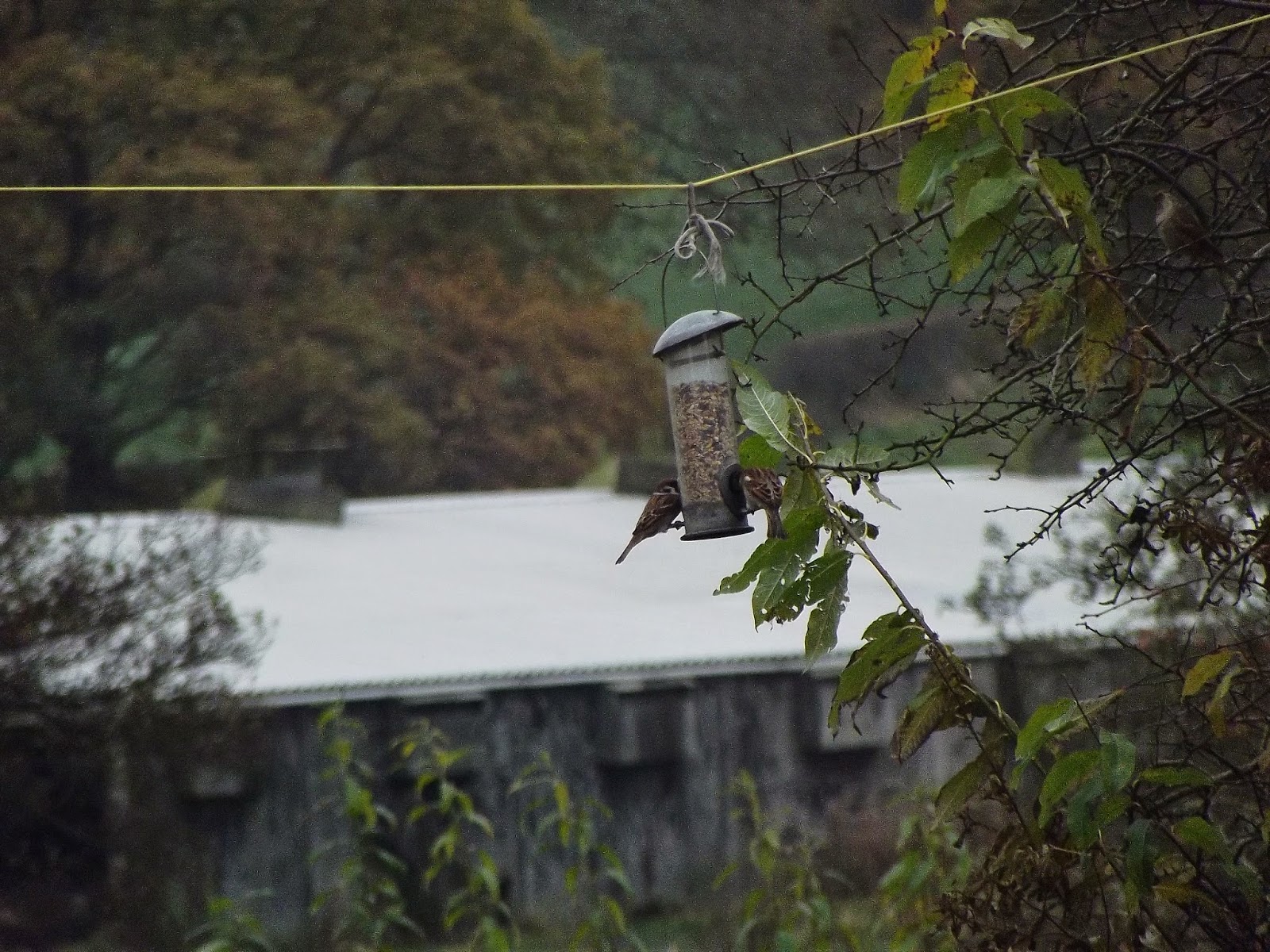
Yesterday was something of a record for my garden - we had three adult Tree Sparrows feeding from our garden feeders. Here is a photo of two of them.


I've had three Tree Sparrows in the garden before, but in this case it was in the spring and some of them were fledgelings being fed by a parent, of which I'd never counted more than two (see pic. below). So seeing three at this time of year is good news, as it means there must be at least three adults. 


We also have a flock (approx. 30) of House Sparrows that feed and breed in and around our house and garden. Both species of sparrow often feed alongside each other at the garden feeders, sometimes on the ground and sometimes perched on the feeder itself. Unfortunately there are also a lot of Domestic Cats living in the vicinity, and these take their toll of various garden birds, including sparrows. For example a few weeks ago, on two consecutive days, I saw the same cat with four apparently recently fledged sparrows. For all I know more birds were killed. I do not know whether these were House or Tree Sparrows or a mix of both. Whichever they were it was not a welcome sight.

Both Tree and House Sparrows are Red Species of Conservation Concern and so earlier on this year, on request of the RSPB, I pledged to provide a home for sparrows. In order to fulfill my pledge I chose to have two Swegler nest boxes for my birthday present in February and since this weekend we have made another communal nest box out of scrap wood. The new Swegler boxes were not used this year but I hope that, now they have become a regular feature of my garden environment, they will be used next breeding season. 


Home-made communal nest box.


Swegler nest box. 
                                                                             House Sparrow and Tree Sparrow on garden feeders.

Of course there may be more than three adult Tree Sparrows, and it may be that though we only ever see two or three at a time, these are different birds. However, Tree sparrows are a very communal species and much larger numbers of individuals feeding will be seen feeding together when flocks are larger. So i suspect there are only one or two pairs living around my home and garden. So an increase of observations of one extra Tree Sparrow on my garden feeders (thats a 50% increase in population size over 10 years) may be close to the actual increase in the Tree Sparrow population, and not just a chance observation. Tree Sparrows are a  highly sedentary species, which means they don't move far. Thjis could of course mean that "my" population could become inbred. However I have seen Tree Sparrows in another part of Endon - near the footpath between the John Emery Land and Endon Riding School. I think they had been feeding on a garden feeder which was in a garden that backs on to the path. If this area holds another small population, there is a chance for the two groups to mix, and therfore reduce the chances of inbreeding. Here is the report of the study of juvenile dispersal of Tree Sparrows that was conducted in 1960-61.

Nationally, Tree Sparrow and House Sparrows numbers may be on the increase (see links below). Perhaps the Endon population is also part of this trend. I do hope so.


http://www.rspb.org.uk/discoverandenjoynature/discoverandlearn/birdguide/name/t/treesparrow/

Friday, 26 September 2014

Tidiness or trashing?

I wonder who did this to a hedge growing along the A53 in Endon? Is it attractive? Is it beneficial for wildlife?  Was it necessary to cut it so close?


Tuesday, 23 September 2014

A walk to Deep Hayes Country Park and back.

Some photos from a walk today.

Approx. 16o Canada Geese in pasture next to Endon Brook.

Frame webs. 

Orb web.


A Puffball species. 

Tar Spot Fungus on Sycamore leaf.

Slimy Honey Fungus.

A Bonnet fungus growing on a twig.

Redleg Toughshank.

Scaly Earthball.

Coral Spot Fungus on dead branch with perhaps juvenile millipedes.

Probably Wrinkled Club Fungus growing amongst moss on the woodland floor. 

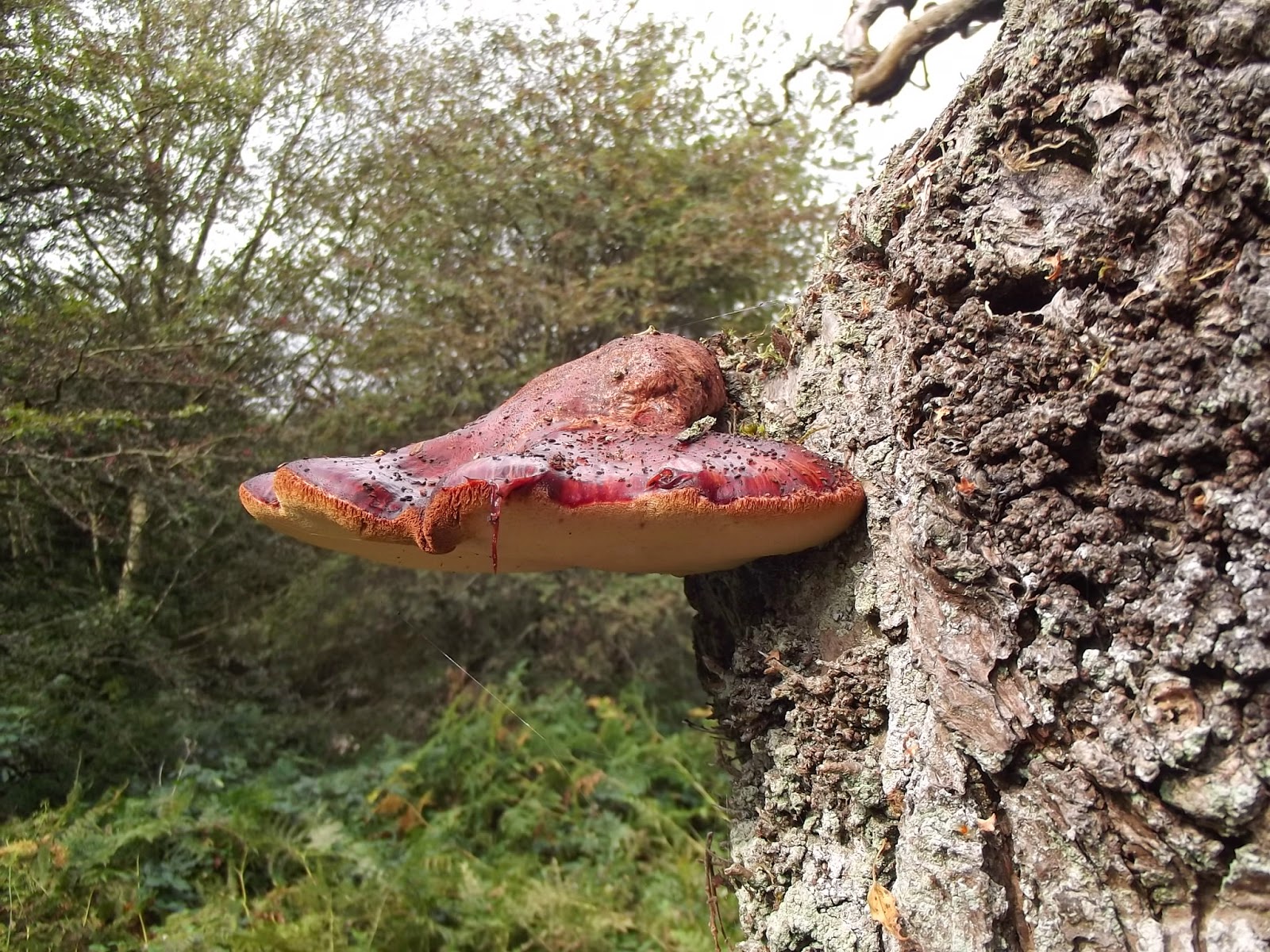
A Beefsteak Fungus growing on a dead oak tree. 

Candlesnuff Fungus.

Birch Bracket (or Polypore) Fungus


Probably a Syrphus sp. hoverfly.

The distinct yellow sides to thorax and legs makes this possibly an Epistrophe spp. feeding on Devil's Bit Scabious.

A Helophilus hoverfly.

Monday, 22 September 2014

A new wildflower species appears and another one spreading along Caldon Canal.

Several patches of Purple Loosestrife have appeared along the Caldon Canal between Endon and Stockton Brook this summer. I am certain that this species has not been growing here in the recent past, not in the last ten years anyway. The explanation for this recent addition to the canalside flora seems to be that it is one of the species included as plant plugs in the coir rolls that Staffordshire County Council are using to protect the bank as part of the upgrade of the canal towpath in to a cycle path.

Purple Loosestrife.

The plant that is spreading is Orange Balsam Impatiens capensis which is a native of N America and not the British Isles. This year there are several clumps between Endon and Hazelhurst Junction. It is a relative of the often unwelcome Himalayan Balsam I.glandulifera which is a particularly invasive non-native species this time from not surprisingly the Himalayas. I assume the seeds disperse by floating to new sites along the canal. The orange species does not appear to be as prolific or smothering as does the Himalayan. Himalayan Balsam appears to be increasing in the Endon area, where it grows along the Caldon Canal, the disused railway and tributaries of and Endon Brook. 

Orange Balsam.

Himalayan Balsam on Endon Brook near Denford in 2010.


Friday, 19 September 2014

Reply from my MP to my letter about the illegal persecution of Hen Harriers


When I wrote to my MP about the illegal persecution of Hen Harriers I didn't expect her to be on the raptors side - she is a Conservative after all. Hence I assumed her views would be in support of the sort of wealthy people/institutions who own (driven) grouse moors and also on the side of the people can afford to indulge in the rarified hobby of red grouse shooting. After all, these sort of people probably vote Conservative! Anyway, not surprisingly, her reply to my letter shows that my MP does not fully understand the issues facing the survival of the Hen Harriers as a breeding species - nor does she seem to care. But, even if I can't expect her to have any particular interest or expertise in wildlife issues (because perhaps maybe be the natural world doesn't float her boat), I do expect her to support the upholding of the law which, judging by her second paragraph, she is not completely prepared to do. It really is shocking and disappointing that she says it may be OK for grouse moor owners and their gamekeepers to break the law by "attempting to scare away birds" and suggesting if this does not work then they could be shot. This in spite of the fact that they are clearly protected by Section 1 of the Wildlife and Countryside Act 1981. In her penultimate paragraph she suggests that egg stealing of Hen Harrier eggs for egg collections may be one reason why Hen Harriers fail to successfully breed in the Peak District. Is she saying that more have tried to breed there and have had their eggs stolen? I think not as this crime would have received publicity in the local, even if the thieves had not been caught. I think she may be confusing last year's disappearance of the the Peregrine nestlings from a nest on The Roaches.

Since the Hen Harrier Day protest on 8th August and since I wrote the letter it was discovered that a pair of Hen Harriers had bred on land near the site of the protest that is owned by the National Trust. Five chicks fledged from their nest and since then three of these have died see 

Saturday, 13 September 2014

Toad, dragonfly and fungi.

I just had a pleasant walk along the Caldon Canal to Hazelhurst Junction and back to Endon on the disused railway line. Notably I spotted Grey Wagtail and Kingfisher, both near the junction itself. other birds seen and hear were Chiffchaffs, Long-tailed Tits, Kestrel, Bullfinch, Wrens, Corvids and Goldfinch. On the way back I managed to get photos of: a Common Toad; probably a male judging by its muscular front legs, A Common Darter basking on an iron rail, and Sulphur Tuft fungi growing on a rotting stump.


Wednesday, 10 September 2014

Late flying butterflies enjoying the warm September weather.

This week I have seen six species of butterfly visiting my garden. The Small Tortoiseshell and Peacock (top and second down photos) and the Brimstone and Comma (bottom two photo) will probably survive the winter (predation and sufficient body fat stores permitting), whilst the Red Admiral and Speckled Wood (middle photo) will die once the wintery weather arrives. Speckled Woods overwinter as caterpillars or chrysalises whilst up until recently no stage of the Red Admiral life cycle has been able to tolerate British winters, however, with the advent of a warming climate it is expected that the adults will be able to survive our winters and become a resident breeding species. Indeed in recent years there have been occasional very early sightings of this species and these are thought to be individuals that have overwintered in Britain http://butterfly-conservation.org/679-823/red-admiral-.html. Up until this happens on a regular basis we rely on a regular supply of migrant Red Admirals to temporarily populate our islands every year.

by feeding on a sunny September day these butterflies are building up their fat stores that will enable them to survive the winter months.