Monday, 30 June 2014

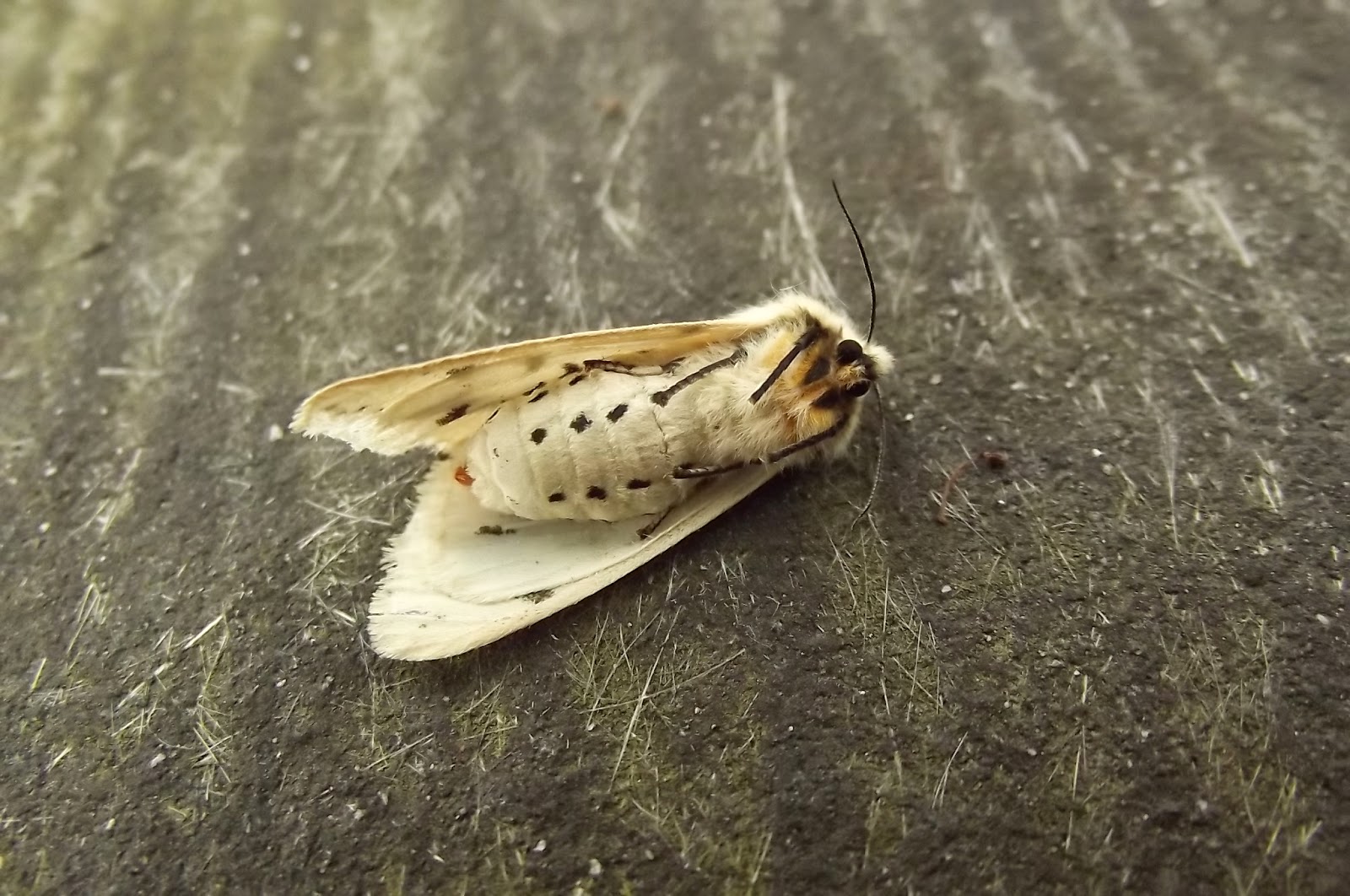
Burnished Brass Moth

Today I found this Burnished Brass Moth in my greenhouse. It is a widespread species, occurring all over the British Isles. The larval foodplant includes nettles.


Saturday, 14 June 2014

Oystercatchers in Endon.

For the past few years I have seen Oystercatchers flying along the Endon Valley, perhaps following the route of the Caldon Canal or Endon Brook. I have also seen Oystercatchers at Tittesworth Reservoir (where at least one pair has bred in recent years and this have had produced three young), at Rudyard Lake (where they may also have bred this year), and in winter by a seasonal pool adjacent to the Caldon Canal (near the Churnet Valley Railway station at Cheddleton). Then this morning at about 05:30am 4 or 5 flew along Endon Valley. Perhaps this was a family party stretching their wings? I wonder if the Staffordshire Moorlands Oystercatcher population also visit the shores Stanley pool, and this is the reason I see them flying along the valley?

Two Oystercatchers at the edge of a frozen seasonal pool near Cheddleton February 2013.

Friday, 13 June 2014

First Red Admiral of the year.

I saw this Red Admiral in my garden today. Individuals of this species overwinter in the south of Britain, however the majority of the early summer population are migrants from southern Europe. Once here they breed and produce a further batch of Red Admirals in July. It looks like this one has missed been eaten by a bird - hence the torn wing!


Recent insect sightings in my garden.

Two moths.

Upper side of Buff Ermine- Spilosoma luteum food plant various shrubs and herbs.

Under side of Buff Ermine.

Silver-ground Carpet Xanthorhoe montanata moth in garden - flying early evening. Foodplants: bedstraws and other low-growing herbs.

Various hymenoptera using a newly installed bug hotel which is situated under my kitchen window.

Probably a wasp investigating newly installed bee hotel under my kitchen window - there were two other individuals of the same species around at the same time. 

A Ruby-tailed Wasp also investigating nest holes. This species parasitises mason bees so it will be looking for nests in which it can lay its eggs!

Red Mason Bee Osmia rufa/bicornis capping her nest in drilled hole in log. 

Red Mason Bee gathering mud in my garden to cap nest. 
A little video (not mine) showing this here http://www.bwars.com/index.php?q=bee/megachilidae/osmia-bicornis

Completed Red Mason Bee nest. 

Tuesday, 3 June 2014

Insects seen along the disused railway this morning.


 Protichneum pisorius a wasp that lay is its eggs in or on various species of hawk moth.

Oedemera lurida a False-Blister Beetle on rose petal.

An, as yet, unidentified moth on Hogweed flowers.

One of the Dance flies a female Empis tessellata. They feed on other invertebrates. 

Cheilosia illustrata a Hoverfly feeding on hogweed growing along disused railway line.

A fly on Goat's Beard.


Tuesday, 20 May 2014

An evening walk along the Caldon Canal.

So far May has been warm and fairly dry, though with heavy showers on the 9th, 10th and 11th May and last night to help keep the gardens and countryside watered. Yesterday evening I walked along the Caldon Canal from Endon down to Baddeley Green. My aim was to see if the Snipe that had been present, and occasionally displaying earlier in the year on the upper Trent valley near Baddeley Green, were still around. As I had planned I arrived at the place where I had seen them before I didn't see or hear any so I assume that that area is just too dry during the spring and summer to support breeding birds. However I had a lovely walk and saw, smelt and heard plenty of other wildlife.

Flowers.
May blossom and Cow Parsley on the John Emery land - Endon. 
First of all the smell of hawthorn blossom and Cow Parsley was pervading the air, which, along with its abundance made for a very pleasant atmosphere. And, as with 2013, we seem to be having another good Meadow Buttercup year; the meadows are full of them.

Birds.
Starling roost at Baddeley Green
Secondly, many bird species were singing an evening chorus, notably the Robins were more vociferous than they have been in recent mornings. There were several males singing from the willows etc. along the disused railway line. I also heard  a Reed Bunting in the willow scrub in its accustomed territory adjacent to the canal at Stanley Moss. Several Chiffchaffs, Whitethroats and Garden Warblers and a single Song Thrush  were also present. In the small plantation near Stanley Road (by the Stockton Brook Golf Club) I watched Woodpigeons eating either the emerging leaves or flower buds of the Ash trees. young Rooks in the rookery there testing their feathers as they prepare to leave the nest for the first time, heard a Jay harrassing the Blackbirds in the same copse. Then further down into Baddeley Green I discovered that the Jackdaw roost that is present in winter is also occupied during spring; presumably these are non-breeding birds, as their conspecifics are busy with nests in other places (e.g. the chimneys of my neighbours houses). And I managed to take this blurry photo of a male Grey Wagtail near Stockton Brook.

Male Grey Wagtail in Sycamore tree on side of Caldon Canal  near Stockton Brook.
Mammals.
Plenty of Rabbits were out nibbling the pastures alongside cattle under, what presumably, is the relative safety of dusk light. And as darkness arrived bats appeared to feed on the numerous insects that were flying over the canal and along the hawthorn hedges; perhaps the blossom attracts the insects and this in turn attracts the bats? 

Photos of Caldon Canal towpath upgrade.
The new cycle path surface. 

Coir rolls in place along the Caldon Canal between Ednon and Stockton Brook. The coir rolls are intended to reduce bankside erosion and be more sympathetic with wildlife interests than would be hard engineering see below.

The engineers have had to use hard engineering along this short section of the towpath. Clearly, had they used this along the whole length the hard,vertical edge would have been inimical to aquatic mammals, amphibians and reptiles which use this canal. I think the soft engineering look  is a lot more aesthetic too!


Sunday, 11 May 2014

Do ducks carry their eggs to safety?

On the morning of 6th May on the Caldon Canal, near Hazelhurst Junction, an unusual event occurred. A female Mallard plus two males took off from the side of the canal. The strange thing was that the duck had what appeared to be a whole egg in her bill. The two drakes followed close behind her. The duck shortly dropped the “egg” and it entered the canal water and sank. Initially it appeared as though the drakes were chasing the duck in order to mate with her, after all this is a commonly seen behaviour at this time of year – it being the breeding season. The next day a fox was seen in the same place as the Mallards had been seen the day before. I decided to find out what might have be going on. There isn't much information about this phenomenon on the internet but this is what I did find.

In 1978 The Wilson Bulletin (published in the United States) describes observations of (American) Wood Ducks carrying, what were perhaps, whole eggs. It seemed that, when a predator - in this case Red-bellied Woodpeckers, had broken some of the eggs in a duck's nest she removed at least one of the remaining eggs to a new site. It is speculated that this is an attempt to save her remaining offspring from predation. According to this paper (see link below) this observation, by individuals from this species in particular, has been recorded several times. In an attempt to test the theory that the ducks were influenced by the action of predators an experimenter placed broken eggshells on previously un-predated nests whilst the ducks were temporarily absent. On their return the ducks removed an egg or eggs. In another paper written by an American and a British academic, the second from the Wildfowl and Wetlands Trust in Slimbridge (Glous.), the authors document reports of parent birds of various species carrying their young to safety either on their backs or in their bills. In this paper, egg carrying by Mallards and other species of Anatidae (swans, geese and ducks), is described (see second link below) though in this paper they mention only addled eggs being removed from nests. The authors discuss how unlikely it seems given that the anatidine bill is poorly adapted for carrying items as they write that these species do not directly feed their young or courtship feed, and appear to have difficulty carrying nest material in their bills.

So, it seems we can't be sure what was observed, but perhaps the presence of the fox seen the next day is significant. Maybe the birds were disturbed by the fox and all three flew up, the female's instinct impelling her to grab the egg which she subsequently dropped. Had it been a fresh egg presumably it would have eventually risen to the water's surface and floated, whereas an addled egg would stay under water. Next time we see something like this we will watch to see if the egg sinks or floats! Anyway, whatever is the actual story it certainly prompted some interesting speculation!


A Mallard and her ducklings.